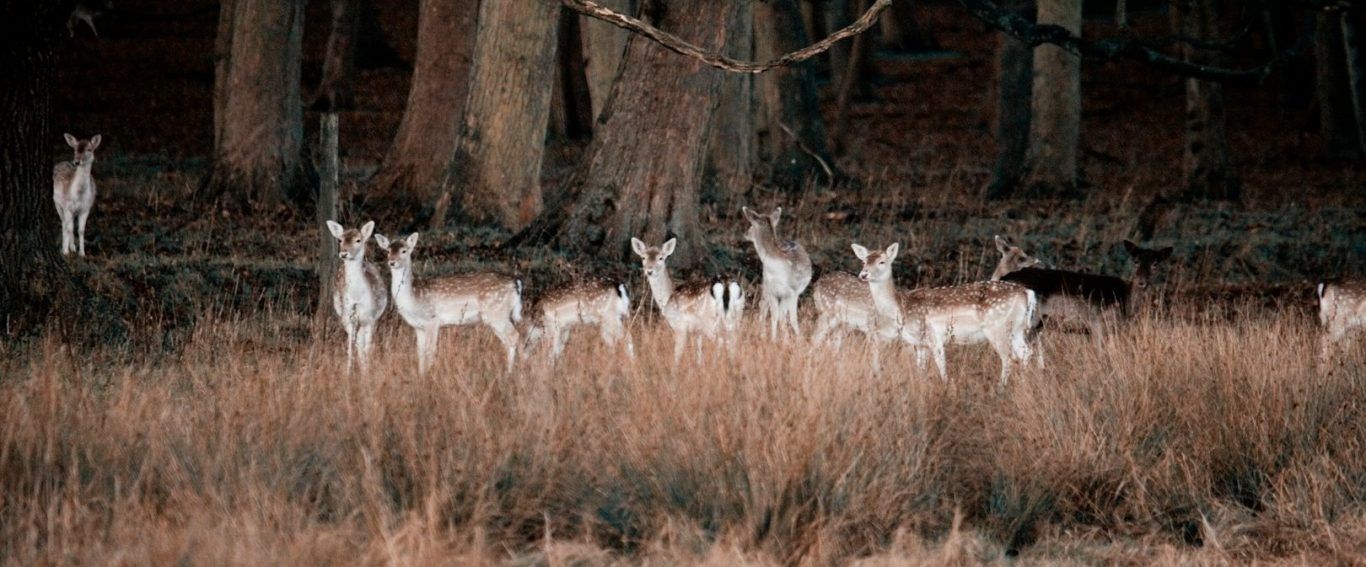
There are 6 species of deer found in the UK: Red, Sika, Fallow, Roe, Chinese Water Deer and Muntjac, with only the Red and the Roe being native to the UK, all the others have been introduced over the years or have escaped from captivity and spread. So why do we need to control them?
Controlling deer populations is essential because, in the absence of natural predators, overabundant deer cause severe environmental damage, including the destruction of woodlands, biodiversity loss, and significant agricultural losses. High populations lead to overgrazing, which prevents forest regeneration, reduces food for other wildlife, increases vehicle collisions, and threatens animal health through starvation and disease.
Key reasons for controlling deer populations include:
- Preventing Environmental Damage: Overbrowsing by deer inhibits the growth of new woodlands, damaging young trees, shrubs, and preventing forest regeneration.
- Protecting Biodiversity: Excessive grazing reduces habitat quality, adversely affecting bird species like nightingales and woodcock, as well as insects and flora.
- Agriculture and Forestry Impacts: Deer cause significant financial losses to farmers and forestry managers by destroying crops and stripping bark from trees.
- Public Safety and Health: As populations grow, deer-vehicle collisions increase, with up to 74,000 accidents occurring annually in some regions. Furthermore, high deer density increases the prevalence of ticks, which carry diseases.
- Deer Welfare: When populations exceed the habitat's capacity, it leads to overcrowding, malnutrition, and starvation.
Effective management, such as culling, helps restore the balance, ensuring a healthier ecosystem and sustainable habitat.